Conference rooms, breakrooms, counters, switches, handles, and shared equipment areas.
Sanitization services
Sanitization focused on the areas people share most.
High-touch surfaces, restrooms, breakrooms, and shared rooms need more than a vague add-on. Demo Clean builds sanitization into a clear cleaning plan so the highest-concern areas get the attention they deserve.
Schedule a WalkthroughWho this is for
Buildings where shared spaces need a higher standard.
Sanitization is for facilities that want focused attention on the surfaces people touch, use, and worry about most. It works best when it is tied to a clear cleaning scope.
Waiting areas, restrooms, reception surfaces, appointment rooms, and customer-facing touchpoints.
Shared rooms, restrooms, tables, door handles, traffic paths, and frequently used surfaces.
Checkout areas, customer counters, fitting rooms, restrooms, door pulls, and shared surfaces.
The common problem
Sanitization gets weak when it is treated like a buzzword.
The word sounds reassuring, but customers need to know what is actually being addressed. A strong sanitization plan names the surfaces, sets the frequency, and fits into the cleaning routine instead of floating outside it.
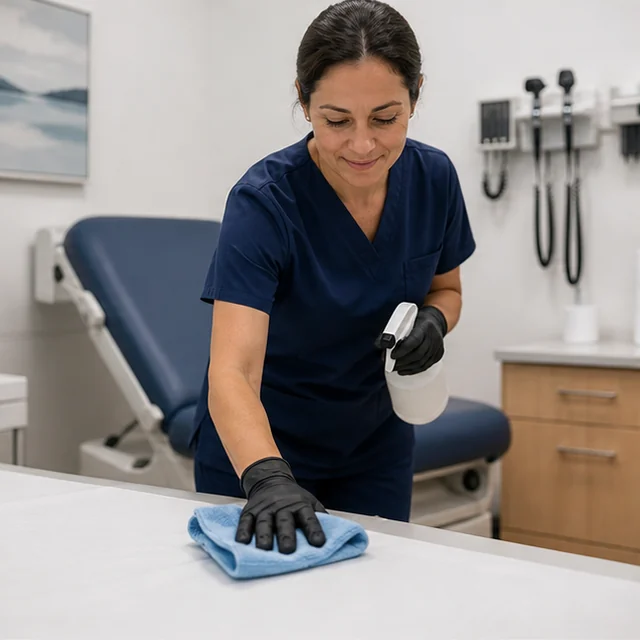
What sanitization includes
The touchpoints and shared areas people notice and rely on.
Door handles, push plates, switches, counters, railings, shared controls, and frequent-contact points.
Fixtures, dispensers, counters, partitions, handles, trash areas, and other concern-heavy surfaces.
Tables, counters, sinks, appliance handles, shared surfaces, trash points, and employee-use areas.
Conference rooms, waiting areas, classrooms, community rooms, and spaces used by multiple groups.
Reception counters, checkout areas, waiting-room surfaces, entry points, and customer touchpoints.
Extra attention for seasonal concerns, events, higher-traffic days, or spaces with added sensitivity.
How we build the scope
The plan starts by identifying the concern points.
Sanitization should not be a vague checklist item. We walk the building, identify shared spaces and high-touch surfaces, then build a routine that fits the facility's traffic and concerns.
Review restrooms, breakrooms, conference rooms, lobbies, and any higher-concern spaces.
Name the handles, counters, switches, surfaces, and rooms that need repeatable attention.
Match sanitization to traffic, cleaning schedule, customer expectations, and facility use.
Sanitization rhythm
The right plan depends on traffic and shared-space use.
Best for facilities that want sanitization layered into regular commercial or janitorial cleaning.
Useful for restrooms, lobbies, counters, meeting rooms, and spaces used by many people each day.
A practical fit before or after events, meetings, training sessions, or facility-wide gatherings.
Helps add focused attention when illness concerns, traffic, or seasonal facility use increases.
Why Demo Clean
Sanitization should be specific enough to trust.
Sanitization FAQ
Questions before we build the sanitization plan
What areas are included in sanitization services?
Sanitization commonly focuses on high-touch surfaces, restrooms, breakrooms, shared rooms, door handles, counters, switches, and other frequently used areas.
Is sanitization different from regular cleaning?
Yes. Regular cleaning removes visible soil and keeps spaces presentable, while sanitization adds focused attention to touchpoints and higher-concern areas after the base cleaning routine is defined.
How often should a facility schedule sanitization?
Frequency depends on traffic, shared-space use, restroom volume, industry expectations, and whether the building has seasonal or event-driven concerns.
Can sanitization be added to janitorial service?
Yes. Sanitization is often layered into recurring janitorial or commercial cleaning so high-touch areas are handled within the normal service rhythm.
Schedule a walkthrough
Let’s build the sanitization plan around your facility.
Show us the shared spaces, touchpoints, and higher-concern areas. We will turn that walkthrough into a practical sanitization scope that fits your cleaning routine.
Review high-touch areas and shared rooms.
Match sanitization frequency to facility traffic.
Layer sanitization into the broader cleaning plan.